Introduction
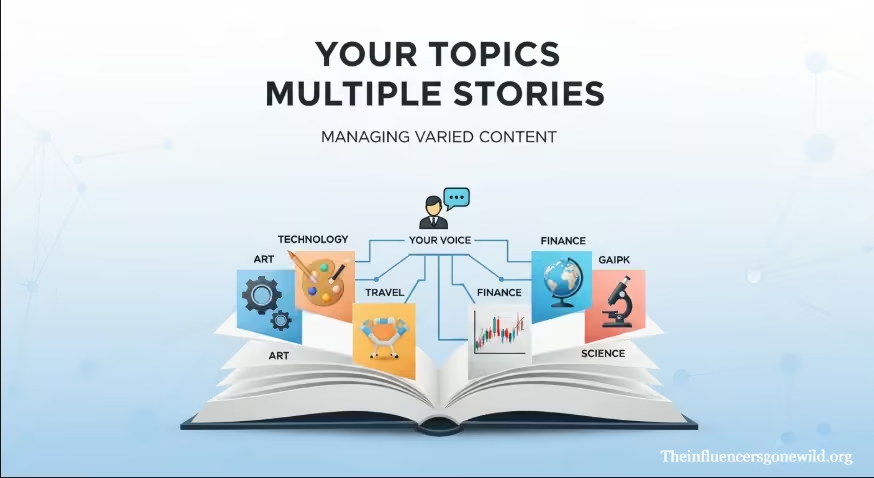
In today’s world, we come across a wide variety of information every day. Whether you are a student, a blogger, a teacher, or a content creator, there are times when you need to handle many ideas at once. This situation is often referred to as your topics multiple stories, where different subjects are combined or presented together.
Understanding how to organize multiple stories under one main topic can make information easier to understand, more engaging, and more useful for the audience.
This article explains how to handle your topics multiple stories in a simple and clear way. It provides practical steps to manage information and present it effectively.
What Does Your Topics Multiple Stories Mean?
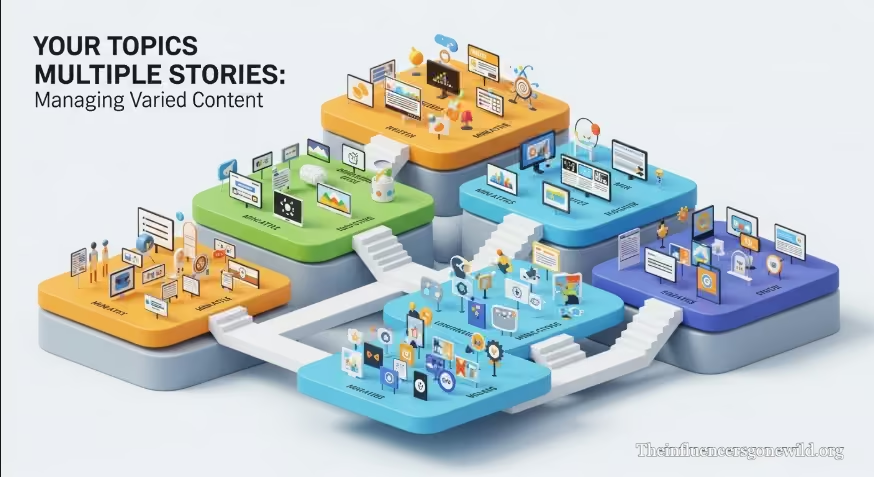
The phrase your topics multiple stories refers to a situation where you are dealing with several ideas, points, or storylines under one main subject. It means grouping and presenting different parts of information in an organized manner. This approach is helpful in writing, teaching, researching, and even everyday communication.
For example, if someone is writing about technology, they may cover different stories like mobile devices, artificial intelligence, and cybersecurity. Each story connects with the main topic but needs to be presented separately for clarity.
Why Your Topics Multiple Stories Are Important
The concept of your topics multiple stories is important because it helps keep information structured. Without organization, information can appear confusing or overwhelming. Here are some key reasons why this approach matters:
1. Clarity in Information
When multiple stories are separated and explained clearly, the audience understands the message better.
2. Better Engagement
People pay more attention when content is simple, clear, and divided into meaningful sections.
3. Easy Learning and Recall
Well-organized information is easier to remember, especially for students and readers.
4. Helps in Content Planning
Writers and educators can plan lessons or articles more effectively when they break them into sections.
How to Organize Your Topics Multiple Stories
To use your topics multiple stories effectively, it is important to organize the content step by step. Here are some simple methods you can follow:
1. Identify the Main Topic
Start by selecting your main subject. This is the central idea that connects all the stories.
2. Divide Content into Subtopics
Break the main topic into smaller, more specific parts. Each part will represent one story within the broader topic.
3. Arrange Information in Logical Order
Decide the best sequence to present the stories. Usually, moving from general to specific works well.
4. Use Headings and Subheadings
Headings help separate each story clearly. This makes the content easy to follow.
5. Write in Simple Language
Using simple and easy vocabulary ensures that readers of all backgrounds can understand.
6. Summarize Key Points
At the end of each section, provide a brief summary to highlight the main idea.
Examples of Your Topics Multiple Stories in Real-Life Situations
Understanding your topics multiple stories becomes easier with examples. Here are some situations where this concept is useful:
In Education
A teacher may teach a subject like history and divide it into stories such as ancient civilizations, middle ages, and modern history.
In Journalism
A news report may cover topics such as politics, sports, economy, and culture under one publication.
In Blogging
A lifestyle blog may include stories on fashion, travel, fitness, and cooking but still fall under one brand or theme.
In Business Presentations
A business presentation may cover profit reports, employee performance, marketing strategies, and future plans under one meeting.
Tips for Presenting Your Topics Multiple Stories Effectively
Here are some useful tips to make your explanation of your topics multiple stories more effective:
Use Short Paragraphs
Short paragraphs are easier to read and understand.
Add Examples
Examples make abstract ideas clearer.
Avoid Complex Words
Simple language increases clarity and helps maintain reader interest.
Stay Consistent
Use the same format or structure across all stories to maintain uniformity.
Common Mistakes to Avoid When Handling Your Topics Multiple Stories
Sometimes, while managing your topics multiple stories, common mistakes occur. To prevent confusion, be aware of the following:
Mixing Ideas Together
Each story should be understood on its own. Avoid combining too many details at one time.
Skipping Transitions
Transitions help move smoothly from one story to another. Without them, the information may feel disconnected.
Overloading Information
Keep each section focused. Providing too much detail can overwhelm readers.
Ignoring the Main Topic
Always remember that all stories must connect to the main subject.
Benefits of Mastering Your Topics Multiple Stories
Once you learn how to organize your topics multiple stories, many benefits follow:
- Better communication skills
- Improved writing and teaching ability
- Clear and structured thinking
- More engaging content creation
- Stronger connection with your audience
Whether you are writing articles, explaining concepts, or giving presentations, this method increases clarity and understanding.
Conclusion
Learning to handle your topics multiple stories is important in today’s world where information is abundant. By breaking content into organized sections, presenting each story clearly, and connecting everything to one main topic, communication becomes smooth and effective. Anyone can apply this approach regardless of their field.
With practice, your ability to present information clearly will improve, helping you share your ideas in a more meaningful and understandable way.