Introduction
In today’s digital-first world, enterprise technology has become more than just a support function—it is the core enabler of innovation, growth, and competitive advantage.
From cloud computing and artificial intelligence (AI) to cybersecurity and data analytics, enterprise technology empowers organizations to streamline operations, make data-driven decisions, and deliver better customer experiences.
Businesses that fail to adopt and adapt to modern enterprise technology risk falling behind in efficiency, customer engagement, and market relevance. Understanding this ecosystem, its challenges, and its opportunities is essential for business leaders, IT professionals, and decision-makers.
This article provides a comprehensive guide to enterprise technology: its meaning, components, benefits, emerging trends, challenges, and real-world applications.
What is Enterprise Technology?
Enterprise technology refers to the suite of digital tools, systems, and infrastructure designed to manage large-scale operations across organizations. Unlike consumer technologies, which focus on individuals, enterprise technology serves the needs of businesses, governments, and institutions with complex requirements.
Key Characteristics of Enterprise Technology:
- Scalability: Designed to handle large volumes of users, data, and transactions.
- Integration: Connects different departments, processes, and data sources.
- Security: Built with strong protection measures for sensitive business data.
- Customization: Adaptable to industry-specific and organizational needs.
- Reliability: High availability and minimal downtime.
Evolution of Enterprise Technology
Enterprise technology has evolved dramatically over the past few decades:
- Mainframe Era (1960s–1980s): Centralized computing with limited connectivity.
- Client-Server Era (1990s): Rise of personal computers and departmental applications.
- ERP and CRM Systems (2000s): Integrated systems for finance, HR, and customer management.
- Cloud and Mobile Revolution (2010s): Shift to scalable, subscription-based solutions accessible anytime, anywhere.
- AI and Digital Transformation (2020s): Intelligent automation, predictive analytics, and industry-specific platforms driving innovation.
Core Components of Enterprise Technology
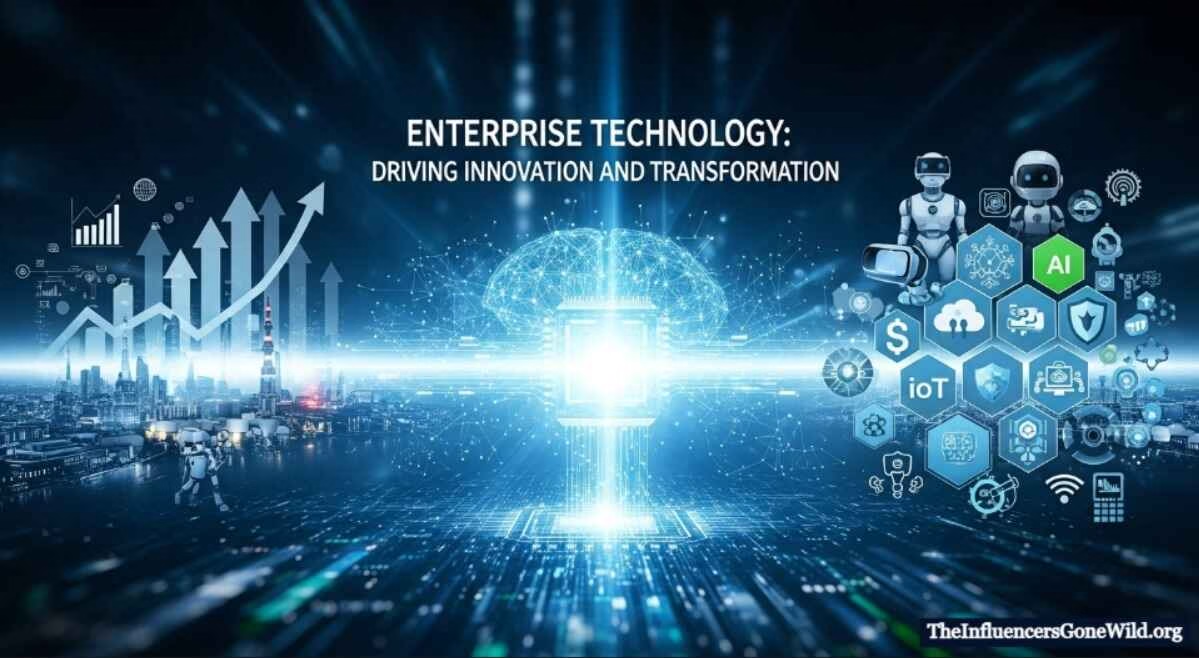
Enterprise technology spans multiple domains. Below are the major pillars:
1. Enterprise Software Systems
- ERP (Enterprise Resource Planning): Manages finance, HR, supply chain, and operations.
- CRM (Customer Relationship Management): Improves customer interactions and insights.
- SCM (Supply Chain Management): Enhances efficiency in procurement, production, and logistics.
2. Cloud Computing
- Public Cloud: Shared infrastructure managed by providers.
- Private Cloud: Dedicated infrastructure for specific organizations.
- Hybrid Cloud: A Combination of both for flexibility and cost-effectiveness.
3. Data Analytics and Business Intelligence (BI)
- Descriptive Analytics: Understands past performance.
- Predictive Analytics: Forecasts future outcomes.
- Prescriptive Analytics: Suggests optimal decision-making paths.
4. Artificial Intelligence (AI) and Automation
- Machine Learning (ML): Improves processes based on data.
- Robotic Process Automation (RPA): Automates repetitive tasks.
- Natural Language Processing (NLP): Enhances human-computer interactions.
5. Cybersecurity
- Identity management, encryption, and network protection to secure enterprise data and ensure compliance with regulations.
6. Networking and Infrastructure
- High-speed connectivity, edge computing, and 5G technologies ensure real-time communication.
Benefits of Enterprise Technology
Organizations adopting enterprise technology experience measurable improvements:
- Operational Efficiency: Automates manual tasks and streamlines processes.
- Cost Reduction: Minimizes overhead with cloud-based solutions and shared infrastructure.
- Agility and Innovation: Adapts quickly to market changes with scalable tools.
- Enhanced Decision-Making: Data-driven insights support strategic planning.
- Customer Satisfaction: Personalized services and faster response times.
- Risk Management: Stronger security frameworks reduce vulnerabilities.
Challenges in Implementing Enterprise Technology
Despite its advantages, enterprise technology presents challenges:
- High Initial Costs: Investment in infrastructure, software, and training.
- Integration Complexities: Ensuring compatibility between legacy systems and new technologies.
- Data Privacy Concerns: Compliance with strict regulations (e.g., GDPR).
- Talent Shortage: Limited expertise in advanced technologies such as AI and cloud security.
- Change Management: Resistance from employees during digital transformation.
Emerging Trends in Enterprise Technology
The enterprise technology landscape continues to evolve. Key trends include:
1. Artificial Intelligence at Scale
From AI-driven chatbots to predictive maintenance, enterprises are embedding intelligence across business processes.
2. Edge Computing
Processing data closer to where it is generated, reducing latency for IoT and real-time applications.
3. Cybersecurity Mesh
A modern approach that creates a flexible, modular security architecture for enterprises.
4. Blockchain for Enterprises
Used for secure supply chains, financial transactions, and identity verification.
5. Sustainability and Green IT
Energy-efficient data centers and eco-friendly cloud solutions.
6. Low-Code/No-Code Platforms
Empowering non-technical employees to build apps quickly, reducing IT backlogs.
Best Practices for Leveraging Enterprise Technology
- Start with a Clear Strategy: Align technology investments with business goals.
- Focus on User Training: Ensure employees are equipped to adopt new systems.
- Adopt Incremental Implementation: Phased rollouts minimize risks.
- Prioritize Security: Implement multi-layered defenses against threats.
- Measure ROI: Track performance indicators to evaluate success.
Future of Enterprise Technology
Looking ahead, enterprise technology will become even more autonomous, intelligent, and sustainable. Businesses that embrace these tools will unlock growth opportunities, while those that resist will struggle to keep pace.
As quantum computing, metaverse applications, and advanced AI mature, enterprises will gain new ways to innovate, optimize, and compete globally.
Conclusion
Enterprise technology is no longer optional—it is the foundation of business resilience, competitiveness, and transformation. By investing in scalable systems, securing data, and embracing innovation, organizations can position themselves for long-term success.
The key lies in striking a balance between technology adoption, organizational culture, and strategic objectives. Enterprises that master this balance will thrive in the digital economy.